Jump to section
For U.S. Healthcare Professionals Only

JOIN US AT THE ASH ANNUAL MEETING FOR A PRESENTATION ON ENJAYMO | MONDAY 12/12 @ 8 am
Not an official event of the 64th ASH Annual Meeting and Exposition. This presentation is not sponsored or endorsed by ASH. Not CME-accredited. MAT-US-2208046-v1.0-11/2022
VISIT US AT ASH | DECEMBER 10-13 | BOOTH #643
Not an official event of the 64th ASH Annual Meeting and Exposition. This presentation is not sponsored or endorsed by ASH. Not CME-accredited. MAT-US-2208046-v1.0-11/2022
ENJAYMO is an FDA-designated breakthrough therapy for the treatment of hemolysis in Cold Agglutinin Disease (CAD)1
Efficacy and safety of ENJAYMO were assessed in CADENZA2,3
CADENZA, the first 6-month placebo-controlled trial in 42 patients with Cold Agglutinin Disease, demonstrated a significant benefit for patients treated with ENJAYMO across the composite endpoint.2,3

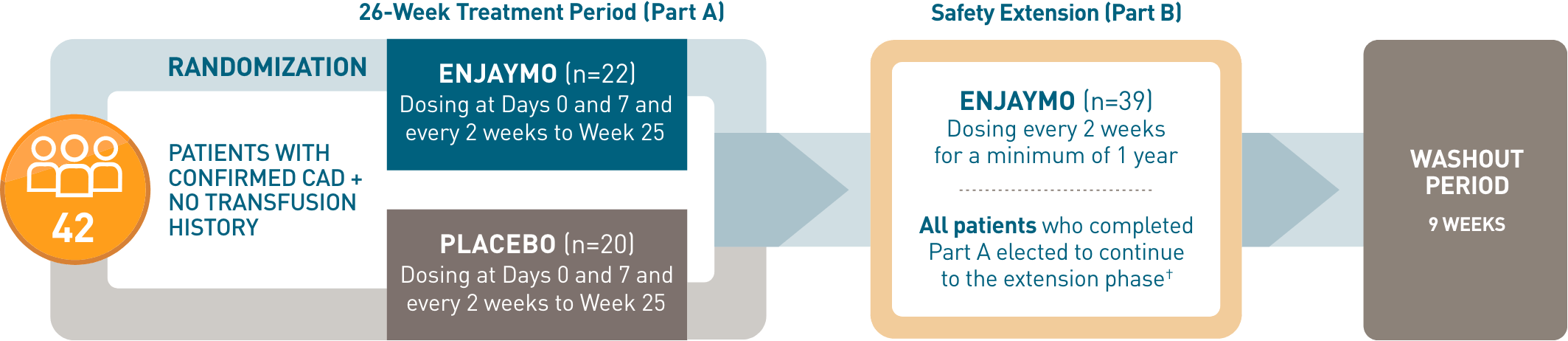
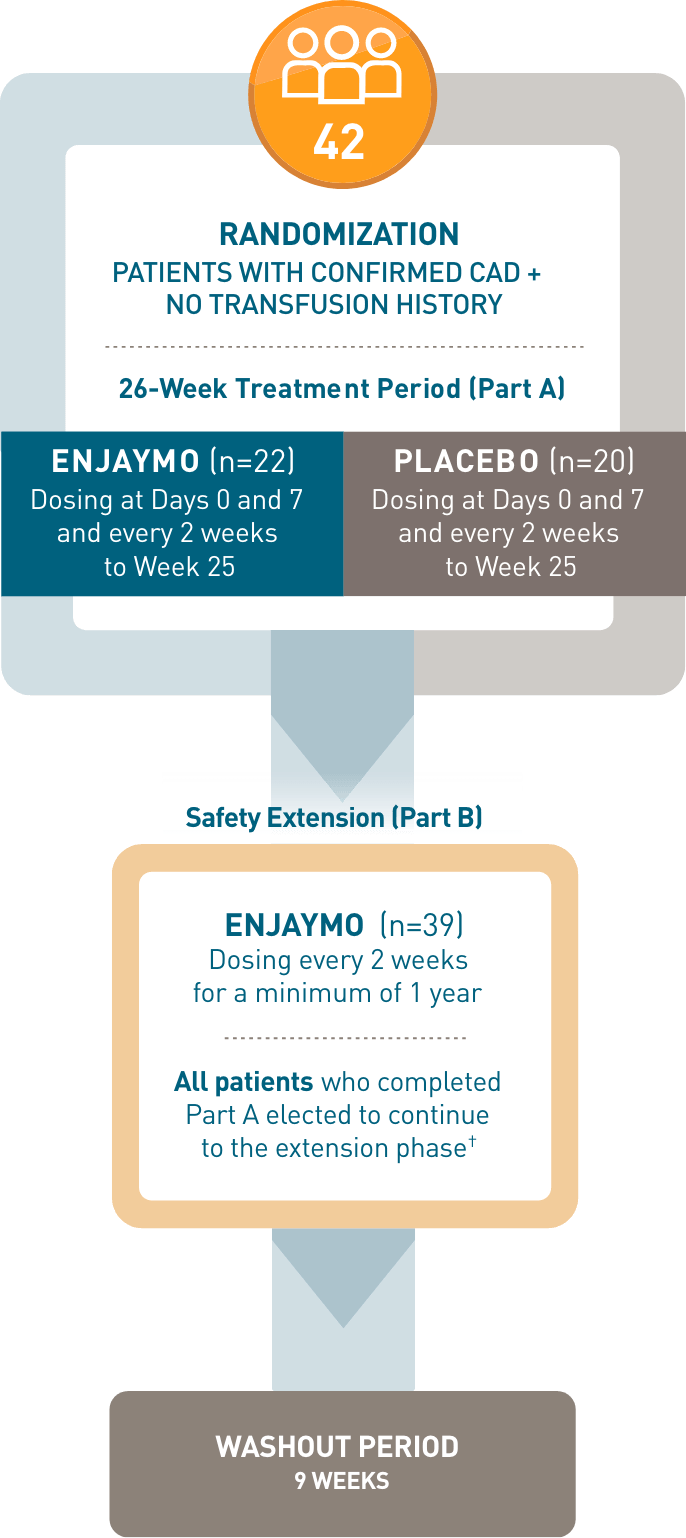
Study design of CADENZA
CADENZA, a 6-month, phase 3, placebo-controlled, global, multicenter, randomized, double-blind trial, demonstrated efficacy and safety of ENJAYMO in 42 patients with Cold Agglutinin Disease and no transfusion history, followed by Part B, a minimum 1-year crossover open-label safety and durability of response extension phase.2,3†
ENDPOINTS STUDIED2
PART A COMPOSITE PRIMARY ENDPOINTS
-
 ≥1.5 g/dL Hb increase from baseline at TAT‡§
-
 Transfusion independence from baseline through Weeks 5 to 26
 Received no additional treatment from Weeks 5 to 26¶
PART A SECONDARY ENDPOINTS
-
Effect on Hb (mean change from baseline at TAT)
-
 Change in fatigue (mean change from baseline at TAT in FACIT-Fatigue score)§#
 Laboratory measures of hemolysis (mean change from baseline at TAT in bilirubin and LDH)
- *No treatment for CAD beyond what was permitted per protocol.
- †Patients with confirmed Cold Agglutinin Disease and no history of transfusion within 6 months or >1 in 12 months prior to enrollment (n=42). Patients with CAS secondary to infection, rheumatologic disease, SLE, or overt hematologic malignancy were excluded, whereas patients with a history of or concomitant low-grade lymphoproliferative disease (bone marrow involvement <10%) were not excluded.2
- ‡In CADENZA Part A, 3 patients discontinued treatment in the ENJAYMO arm and did not complete the trial. All 39 patients who completed Part A continued to Part B.3
- §Treatment assessment time point (TAT) was defined as the mean value from Weeks 23, 25, and 26.
- ¶No treatment for CAD beyond what was permitted per protocol.
- #FACIT-Fatigue is a patient-reported outcome instrument with scores ranging from 0 to 52, with higher scores indicating less fatigue.2
| Parameter | Statistic |
Placebo (n=20)
|
ENJAYMO (n=22)
|
|---|---|---|---|
| Age | Mean (min, max) |
68.2 (51, 83) |
65.3 (46, 88) |
|
Sex
Male
Female
|
n (%) |
4 (20.0)
16 (80.0)
|
5 (22.7)
17 (77.3)
|
| Body weight | Mean, kg (min, max) |
64.9 (48, 95) |
66.8 (39, 100) |
| Hemoglobin | Mean, g/dL | 9.33 (7.7, 11.7) |
9.15 (6.5, 11.1) |
| Bilirubin (total)‖ | mg/dL | 2.09 (1.75 × ULN) |
2.41 (2 × ULN) |
| LDH | U/L | 380.8 | 421.5 |
|
History of transfusion
Within last 6 months
Within last 12 months
|
Mean number of transfusions (range) |
0
0
|
0
0.14 (0, 1)
|
| FACIT-Fatigue scale** | Mean | 32.99 | 31.67 |
- ‖Bilirubin data excluding patients with either a positive or no available test for Gilbert’s syndrome (n=18 for placebo, n=20 for ENJAYMO).
- **Fatigue is measured on a scale of 0 (worst fatigue) to 52 (no fatigue).
ENJAYMO is the first and only approved treatment for CAD patients with a significant benefit vs placebo across key efficacy measures2,3
The majority of patients achieved an improvement in hemoglobin and transfusion independence with ENJAYMO and required no additional Cold Agglutinin Disease treatment (16/22)
73%
(16/22)
achieved all 3
composite endpoint measures at TAT††
- Significant hemoglobin increase
- Transfusion independence
- No additional treatment used‡‡
vs 15% (3/20) with placebo
(Responder rate difference: 58.8%,
95% CI: 34.6%-83.0%, P=0.0004)
Treatment assessment time point (TAT) was defined as the mean value from Weeks 23, 25, and 26.2
- ††Two patients discontinued prior to Week 23, and their status was considered unknown for the purposes of this analysis.
- ‡‡Prohibited therapies included rituximab alone or in combination with cytotoxic agents.
RAPID improvement in anemia SUSTAINED over 1.5 years with continuous biweekly infusions2,5
Mean Hb levels with ENJAYMO during placebo-controlled (6 months) and open-label parts of CADENZA (1 year)2,5,*†‡§
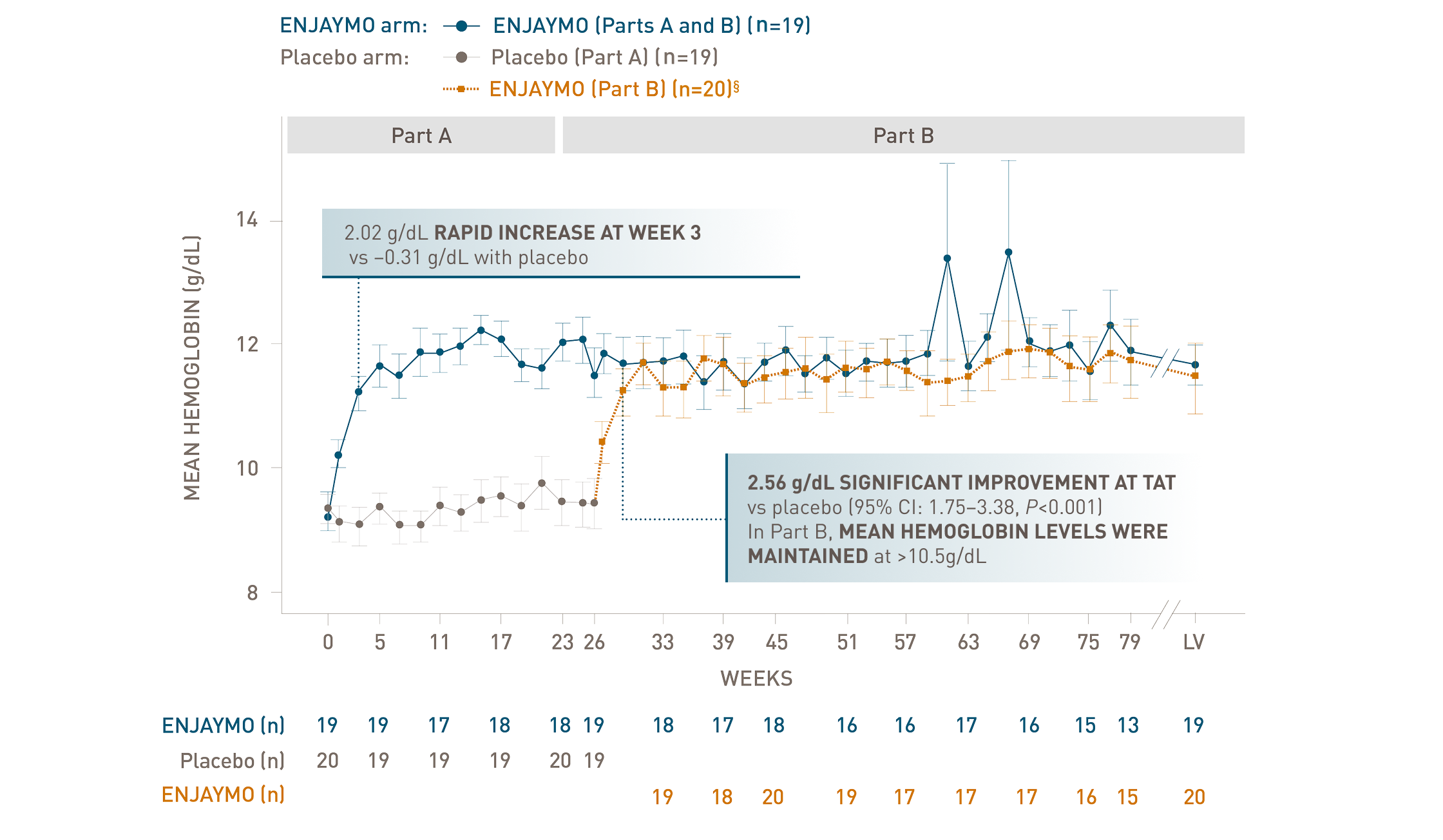
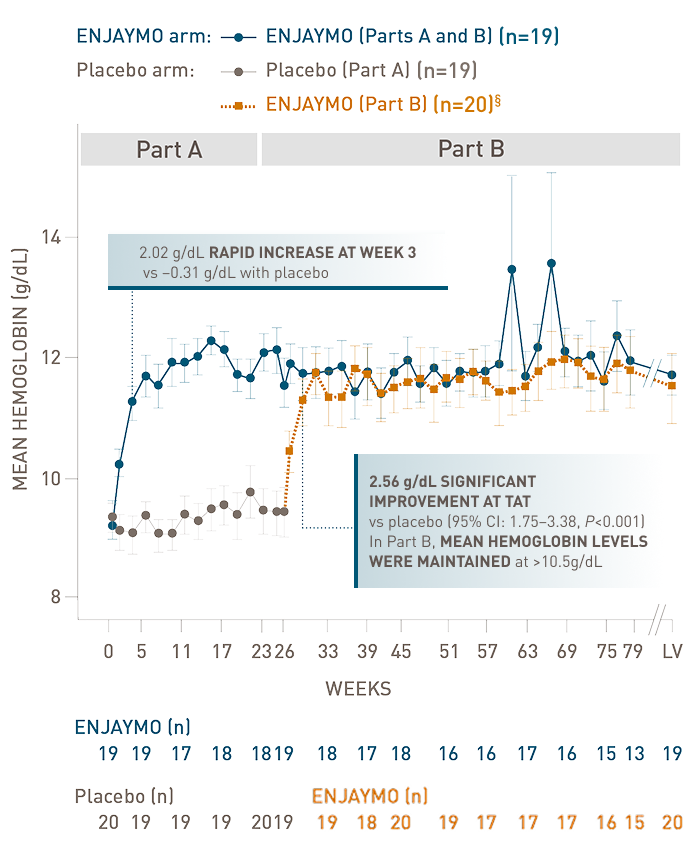
Data at TAT was tested for significance.
Other time points represent observed mean values and are descriptive only. Interpret these findings with caution, particularly given the small sample size.2,3
- *The recommended dosing regimen for adults with Cold Agglutinin Disease consists of an initial dose and a dose 1 week later, followed by 1 dose every 2 weeks.2
- †Trial end refers to last available on-treatment value.2
- ‡In Part A, mean baseline values: Hb was 9.15 g/dL for ENJAYMO and 9.33 g/dL for placebo. Improvement at TAT: LS mean change in Hb was 2.66 g/dL for ENJAYMO and 0.09 g/dL for placebo. In Part B, mean Hb levels were maintained at >10.5 g/dL.2
- §Part B of the trial was open-label, and all participants were receiving ENJAYMO.2
RAPID normalization of bilirubuin levels SUSTAINED over 1.5 years with continuous biweekly infusions2,5
Mean billirubin levels with ENJAYMO (6 months) during placebo-controlled and open-label parts of CADENZA (1 year)2,5,6¶#
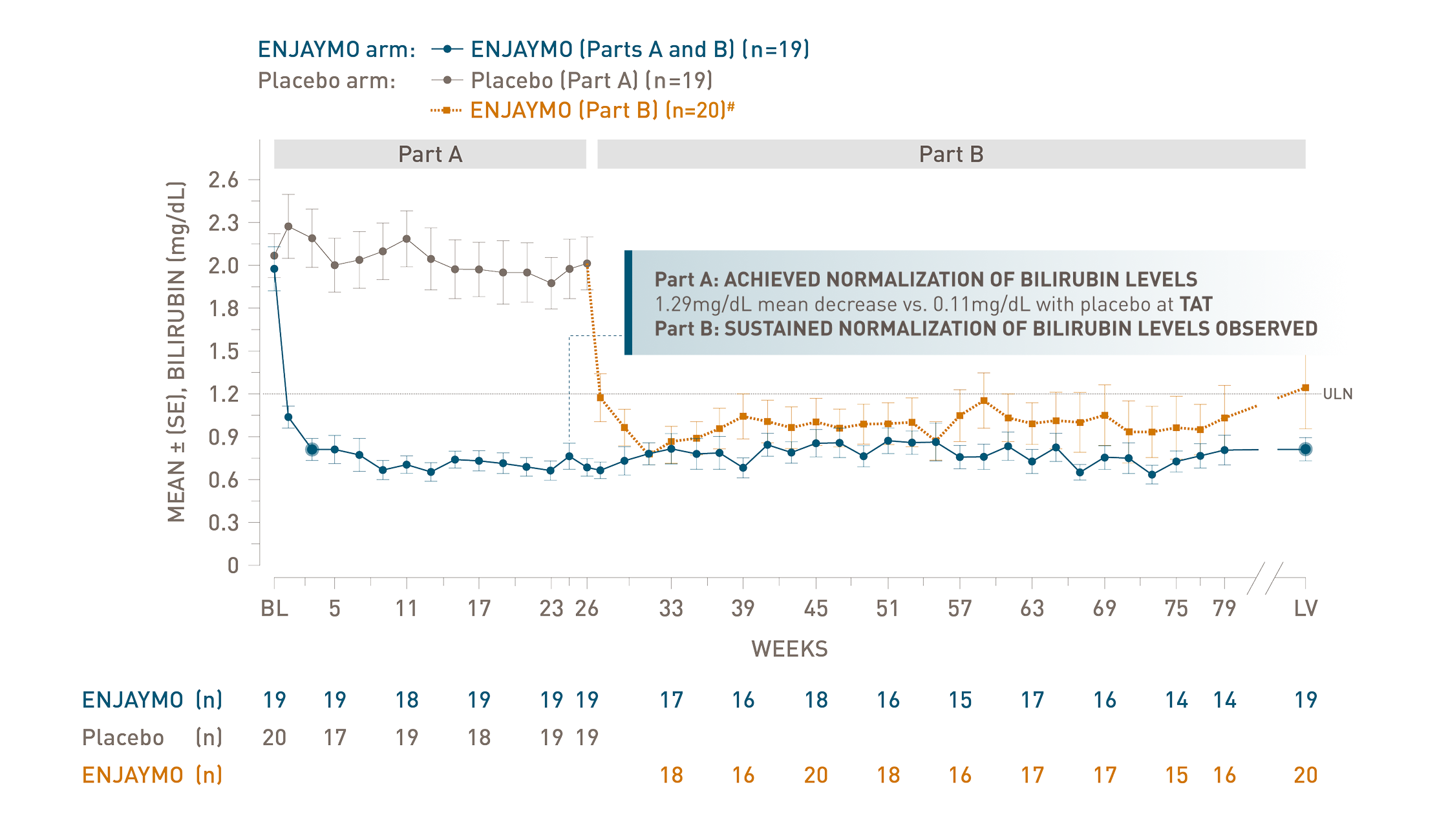
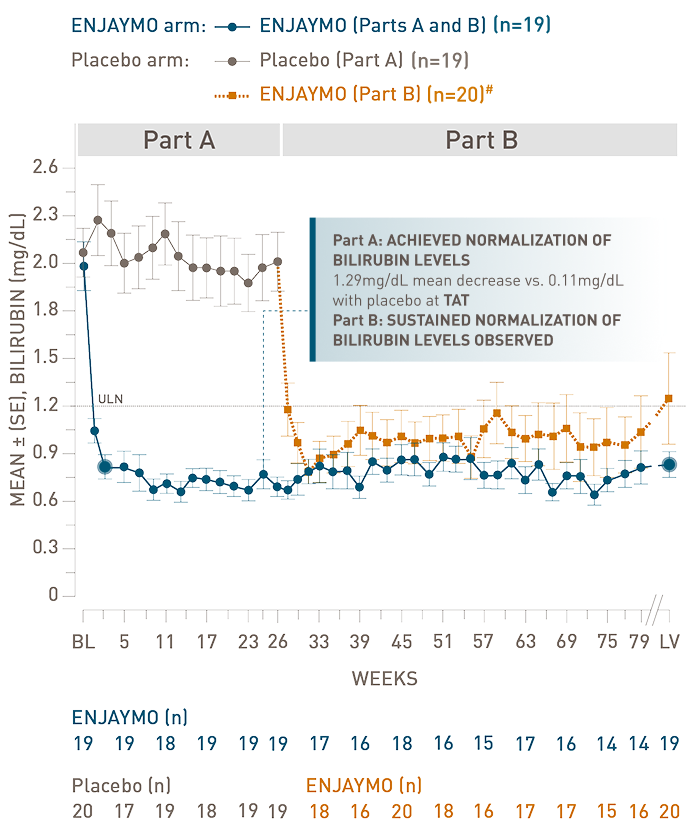
Data at TAT was tested for significance.
Other time points represent observed mean values and are descriptive only. Interpret these findings with caution, particularly given the small sample size.2,3
- ¶In Part A, mean baseline values: bilirubin was 2.41 mg/dL for ENJAYMO and 2.09 mg/dL for placebo. Improvement at TAT: mean decrease in bilirubin of 1.29 mg/dL for ENJAYMO and 0.11 mg/dL for placebo. In Part B sustained normalization of mean bilirubin levels was also observed, indicating a sustained decrease in hemolysis.2
- #Part B of the trial was open-label, and all participants were receiving ENJAYMO.2
FACIT-Fatigue (± SE) through CADENZA Part B at trial end2,5,7
Mean improvement in FACIT-Fatigue (±SE) with ENJAYMO during placebo-controlled (6 months) and open-label parts of CADENZA (1 year)2,5,||**
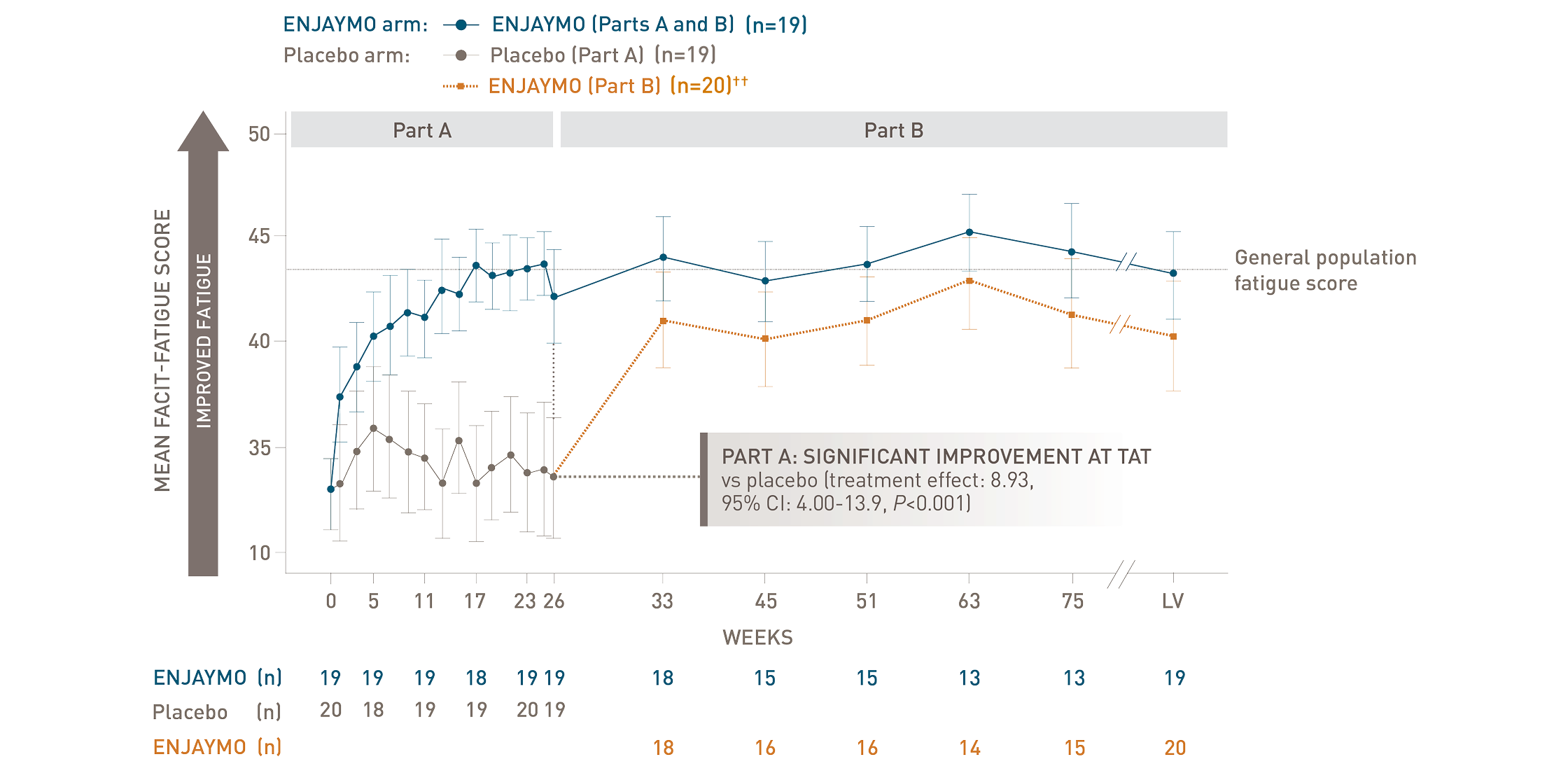
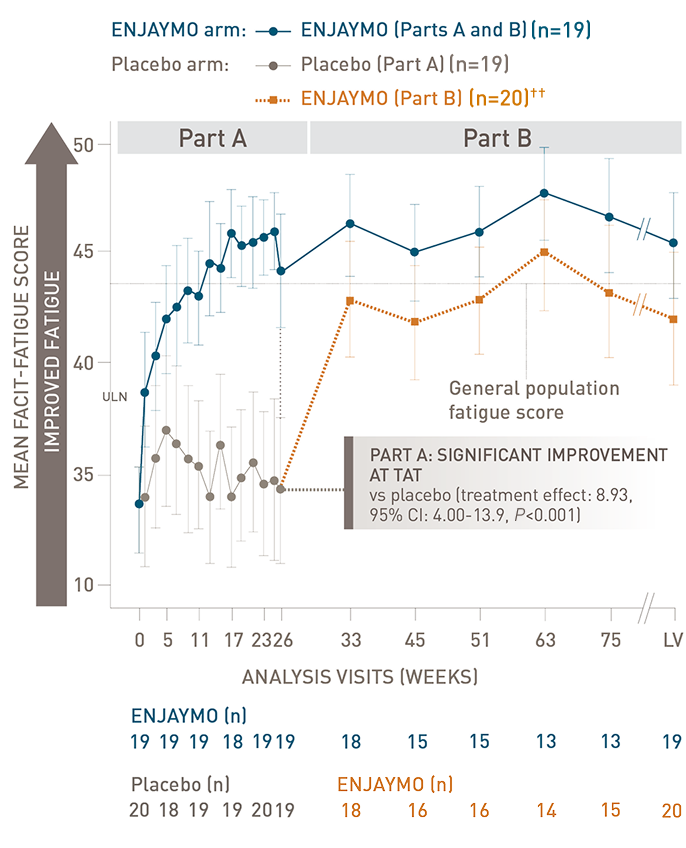
Data at TAT was tested for significance: other time points represent observed mean values and are descriptive only. Patient-reported fatigue after TAT should be interpreted with caution due to the open-label nature of the extension period, particularly given the small sample size.2,3
- ||Mean baseline score for FACIT-Fatigue was 31.67 for ENJAYMO and 32.99 for placebo. LS mean improvement at TAT was 10.83 points for ENJAYMO and 1.91 points for placebo with scores nearing the general population (43.6 mean).
- **Part B is open-label and all participants received ENJAYMO.2
“Getting an infusion every 2 weeks, at home, is routine now. It doesn't keep me from traveling. If I'm going on a long trip, my nurse is so accommodating. She's coming the day we land to give me my infusion. And I get an infusion the day before we leave for the vacation. You make it work.”
—Duffy, living with
Cold Agglutinin Disease
A well-tolerated safety profile studied over 1.5 years2,5
ENJAYMO efficacy and safety were evaluated in CADENZA,* a 6-month placebo-controlled study (Part A [n=42]), followed by a 1-year, open-label, single-arm study (Part B, n=39) in patients without a recent history of transfusion.
Serious infections (bacterial and viral) were reported in 15% (10/66) of patients receiving ENJAYMO in the two phase 3 trials
- ENJAYMO increases susceptibility to serious infections, including infections caused by encapsulated bacteria, eg Neisseria meningitidis, Streptococcus pneumoniae, and Haemophilus influenzae type B.
- Serious infections included urinary tract infection with sepsis, respiratory tract infection, pneumonia, otomastoiditis, and skin infections. One patient (1.5%) died due to Klebsiella pneumoniae. No meningococcal infections were reported.3
Infusion-related reactions occurred in 29% (19/66) of patients treated with ENJAYMO in the two phase 3 trials. One patient permanently discontinued ENJAYMO due to an infusion-related reaction.
Serious adverse reactions (ARs) in patients who received ENJAYMO
- In CADENZA (Part A): 2/22 (9%) reported serious ARs of Raynaud’s phenomenon (n=1) and febrile infection (n=1).
Permanent discontinuation due to adverse reactions in patients who received ENJAYMO was reported in 2/22 (9%) patients from CADENZA trial (Part A)
- In CADENZA (Part A): Raynaud’s phenomenon (n=1), acrocyanosis (n=1), and infusion-related reactions (n=1).
Dosage interruptions of ENJAYMO due to adverse reaction was reported in 3/22 (14%) patients in CADENZA trial (Part A)
*CADENZA included confirmed Cold Agglutinin Disease patients with no history of transfusion within 6 months, or >1 in 12 months prior to enrollment.
In CADENZA (Part A [n=42]): adverse reactions (≥10%) in patients receiving ENJAYMO with a difference of >5% vs placebo2
| Adverse reactions | ENJAYMO (n=22) |
Placebo (n=20) |
|---|---|---|
| Headache | 5 (23%) | 2 (10%) |
| Hypertension | 5 (23%) | 0 |
| Rhinitis | 4 (18%) | 0 |
| Acrocyanosis | 4 (18%) | 0 |
| Raynaud’s phenomenon | 4 (18%) | 0 |
Watch videos of real patients and their providers talking about results with ENJAYMO
Patients and providers share their experience: Gloria and Dr Trevor Feinstein
Patients and providers share their experiences: Nancy and Dr Wei Bai
Consider prescribing ENJAYMO for your next appropriate patient with Cold Agglutinin Disease


ENJAYMO HCP Indication and Important Safety Information
INDICATION
ENJAYMO® (sutimlimab-jome) is indicated for the treatment of hemolysis in adults with cold agglutinin disease (CAD).
IMPORTANT SAFETY INFORMATION
CONTRAINDICATIONS
ENJAYMO is contraindicated in patients with known hypersensitivity to sutimlimab-jome or any of the inactive ingredients.
WARNINGS AND PRECAUTIONS
Serious Infections Including Those Caused by Encapsulated Bacteria
- ENJAYMO, a proximal classical complement C1s inhibitor, increases susceptibility to serious infections, including those caused by encapsulated bacteria e.g. Neisseria meningitidis (any serogroup, including non-groupable strains), Streptococcus pneumoniae, and Haemophilus influenzae type B.
- Life-threatening and fatal infections with encapsulated bacteria have occurred in both vaccinated and unvaccinated patients treated with complement inhibitors.
- Serious infections (bacterial and viral) were reported in 15% (10/66) of patients receiving ENJAYMO in the two phase 3 trials. These infections included urinary tract infection with sepsis, respiratory tract infection, pneumonia, otomastoiditis, and skin infections. One patient (1.5%) died due to Klebsiella pneumoniae.
- Complete or update vaccination against encapsulated bacteria at least 2 weeks prior to administration of the first dose of ENJAYMO, according to the most current ACIP recommendations for patients receiving a complement inhibitor.
- If urgent ENJAYMO therapy is indicated in a patient who is not up to date on their vaccine(s), administer as soon as possible.
- Vaccination does not eliminate the risk of serious encapsulated bacterial infections. Closely monitor patients for early signs and symptoms of serious infection and evaluate patients immediately if an infection is suspected.
-
If ENJAYMO treatment is administered to patients with active systemic infections, monitor closely for signs and symptoms of worsening infection. Some infections may become rapidly life-threatening or fatal if not recognized and treated promptly. Inform patients of these signs and symptoms and steps to be taken to seek immediate medical care.
- Consider interruption of ENJAYMO treatment in patients who are undergoing treatment for serious infection.
- Consider patients’ immune status when initiating treatment with ENJAYMO.
Infusion-Related Reactions
- Administration of ENJAYMO may result in infusion-related reactions. In the two phase 3 trials, 29% (19/66) of patients treated with ENJAYMO experienced infusion-related reactions. One patient permanently discontinued ENJAYMO due to an infusion-related reaction.
- Monitor patients for infusion-related reactions and interrupt if a reaction occurs.
- Discontinue ENJAYMO infusion and institute appropriate supportive measures if signs of hypersensitivity reactions, such as cardiovascular instability or respiratory compromise, occur.
Risk of Autoimmune Disease
- Based on its mechanism of action, ENJAYMO may potentially increase the risk for developing autoimmune diseases such as systemic lupus erythematosus (SLE). Development of SLE has been associated with inherited classical complement deficiency.
- In clinical trials, 4.5% (3/66) of patients developed a relapse or worsening of previously diagnosed autoimmune disease.
- Monitor ENJAYMO patients for signs and symptoms and manage medically.
Recurrent Hemolysis After ENJAYMO Discontinuation
- If treatment with ENJAYMO is interrupted, closely monitor patients for signs and symptoms of recurrent hemolysis, eg, elevated levels of total bilirubin or lactate dehydrogenase (LDH) accompanied by a decrease in hemoglobin, or reappearance of symptoms such as fatigue, dyspnea, palpitations, or hemoglobinuria. Consider restarting ENJAYMO if signs and symptoms of hemolysis occur after discontinuation.
ADVERSE REACTIONS
- The most common adverse reactions in the CADENZA trial (Part A) (incidence ≥18%) are rhinitis, headache, hypertension, acrocyanosis, and Raynaud’s phenomenon. The most common adverse reactions in the CARDINAL trial (incidence ≥25%) are urinary tract infection, respiratory tract infection, bacterial infection, dizziness, fatigue, peripheral edema, arthralgia, cough, hypertension, and nausea.
AR=adverse reaction; CI=confidence interval; CAS=cold agglutinin syndrome; FACIT=Functional Assessment of Chronic Illness Therapy; Hb=hemoglobin; LDH=lactate dehydrogenase; LS=least squares; SLE=systemic lupus erythematosus; TAT=treatment assessment time point; ULN=upper limit of normal.
References:
- CFDA: Food and Drug Administration. FDA approves treatment for adults with rare type of anemia. FDA. February 4, 2022. Accessed October 28, 2025. https://www.fda.gov/drugs/news-events-human-drugs/fda-approves-treatment-adults-rare-type-anemia
- ENJAYMO. Prescribing information. Recordati Rare Diseases Inc.; 2024.
- Röth A, Berentsen S, Barcellini W, et al. Sutimlimab in patients with cold agglutinin disease: results of the randomized placebo-controlled phase 3 CADENZA trial. Blood. 2022;140(9):980-991. doi:10.1182/blood.2021014955
- Röth A, Barcellini W, D'Sa S, et al. Sutimlimab in cold agglutinin disease. N Engl J Med. 2021;384(14):1323-1334. doi:10.1056/NEJMoa2027760
- Röth A, Berentsen S, Barcellini W, et al. Long-term efficacy and safety of continued complement c1s inhibition with sutimlimab in cold agglutinin disease: Cadenza study part B. eClinicalMedicine. 2024;74:102733. doi:10.1016/j.eclinm.2024.102733
- Röth A, Broome CM, Barcellini W, et al. Sustained improvements in patient-reported outcomes after long-term sutimlimab in patients with cold agglutinin disease: results from the Cadenza study open-label extension. eClinicalMedicine. 2024;74:102732. doi:10.1016/j.eclinm.2024.102732
- Cella D, Lai JS, Chang CH, Peterman A, Slavin M. Fatigue in cancer patients compared with fatigue in the general United States population. Cancer. 2002;94(2):528-538. doi:10.1002/cncr.10245


